
Tick-Borne Diseases: Warning Signs Every Owner Should Track
4/19/2026

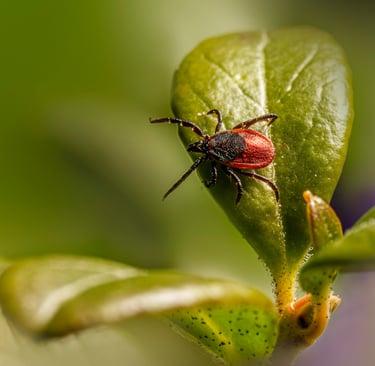
The spring sun is a welcome sight, but as the grass turns green, the biggest headache for dog owners awakens—ticks. Though tiny, the consequences they carry can change your pet's life forever.
In Lithuania, tick season begins in March and lasts until November. In this post, we cover the symptoms of the four most dangerous tick-borne diseases, what to do if you find a tick, and how to protect your "Bed Occupant."
The Golden Rule: Infection doesn’t happen the second a tick bites. Usually, it takes 24 to 48 hours for pathogens to be transmitted (with some exceptions). Therefore, early removal is your best defense.
Babesiosis (Piroplasmosis) – The Lethal Threat
This disease is caused by protozoa that destroy red blood cells, leading to severe anemia and organ failure.
Incubation period: 2 to 14 days (sometimes symptoms appear within 24 hours).
Early warning signs:
Loss of appetite: Your dog suddenly refuses even their favorite "Prey."
Apathy: They don't react to the leash or wag their tail.
Pale gums: Lift the lip—gums should be pink. If they are white or bluish, it’s an emergency.
Critical Sign: Dark, "beer" or "tea" colored urine. This means the kidneys are struggling with dead blood cells.
Lyme Disease (Borreliosis) – The "Sleeping" Ailment
Unlike humans, dogs don't get the "bullseye" rash. The disease can lurk in the body for months.
Incubation period: Very long—2 to 5 months.
Early warning signs:
"Shifting" lameness: Your dog limps on one leg for a few days, then the pain "moves" to another leg.
Swollen joints: Joints feel hot and sensitive to the touch.
Swollen lymph nodes: You may feel small lumps under the jaw or in the armpits.
Anaplasmosis – The "Severe Flu"
This attacks white blood cells or platelets, causing poor blood clotting.
Incubation period: 1 to 2 weeks.
Early warning signs:
High fever: The body feels hot (especially the ears and belly).
Reluctance to move: The dog moves slowly, as if their muscles are stiff or aching.
Bruising: Small red spots (petechiae) on the gums or skin, or unexplained bruising.
Ehrlichiosis – The Silent Destroyer
This can become a chronic condition that drains the body for years.
Incubation period: 1 to 3 weeks.
Early warning signs:
Eye or nose discharge: Often mistaken for a common cold.
Weight loss: Slow weight loss despite eating normally.
Nosebleeds: A sign of severely low platelet counts.
💡 ANASNEKONDA Tip: The "30-Day Rule"
After pulling a tick, mark the date on your calendar. Watch your pet closely for 30 days. If you notice even a slight change in behavior, it’s better to visit the vet for a check-up.
Note: That "tiny sadness" in your dog's eyes might be the first sign of a fight for their life.
📍 The "7-Point Search" Protocol
Don’t just pet their back. Ticks seek thin skin and heat. Always check:
Between toes (especially between the pads).
Armpits and groin.
Inside and outside the ears.
Under the collar/harness.
Around the eyes and muzzle.
Under the tail.
The gum line (yes, they can bite there too!).
🛠️ Target Sighted: How to Remove a Tick Step-by-Step
If you find a tick, do not use oil or alcohol. This makes the tick "vomit," speeding up the infection.
Grip: Use a tick remover tool as close to the skin as possible (by the head).
Pull: Lift straight up with steady pressure. Do not twist—you want to avoid leaving the head behind.
Disinfect: Clean the area with hydrogen peroxide or chlorhexidine.
Eliminate: Ticks are incredibly resilient. Burn them or drown them in strong alcohol. Never crush them with your fingers!
🩺 The 4DX Preventative Test
Most tick diseases are treatable if caught early. We recommend the 4DX test—a quick blood test at the vet that screens for 4 major diseases. Do it at least once a year, preferably in late autumn or early spring.
ANASNEKONDA wishes you safe, healthy, and tail-wagging adventures! 🐾
© anasnekonda.lt | ALL RIGHTS RESERVED | 2026